Romance is one of the most powerful narrative currencies in popular culture. It tells audiences who is desirable, who is worthy of being pursued, and whose inner lives are considered rich enough to anchor a story. For decades, film and television have been remarkably consistent on one point: fat bodies may exist in these worlds, but rarely as objects of genuine romantic desire.
When fat characters do appear, they are often confined to supporting roles. They are the loyal friend, the comic relief, the advice-giver, the “before” picture. Their purpose is usually functional — to support the emotional arc of a thinner protagonist — rather than experiential. They observe romance. They comment on it. They rarely get to inhabit it.
This pattern shows up across genres. In romantic comedies, fat characters are frequently desexualized or infantilized. Their storylines revolve around confidence-building, weight loss, or learning to “accept themselves,” rather than being accepted by someone else. Even when attraction is hinted at, it’s often played for laughs or framed as unexpected, a twist the audience is meant to find surprising rather than natural.
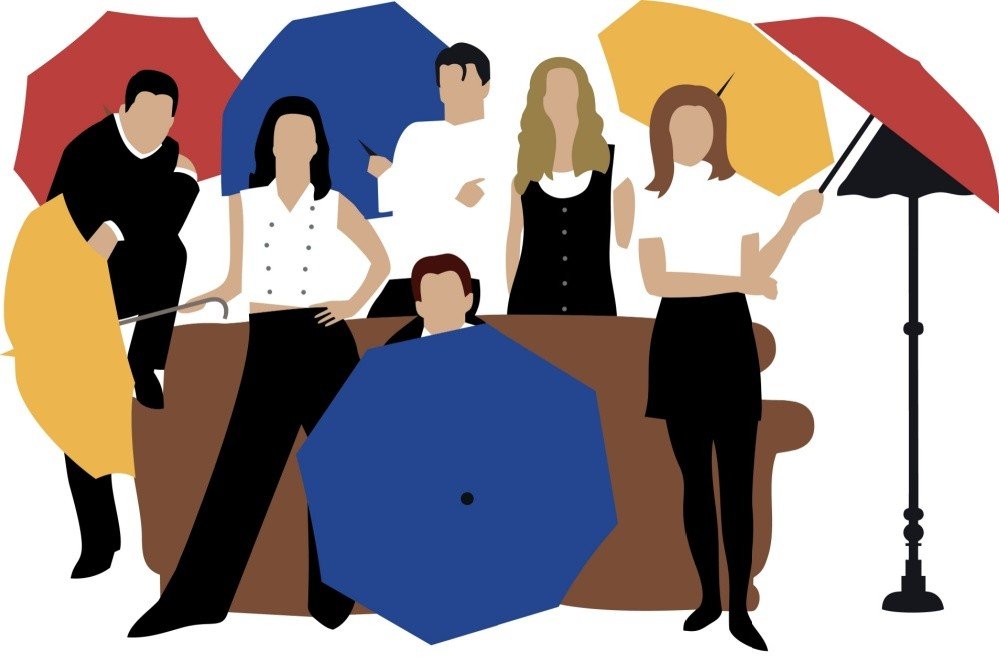
Take ensemble sitcoms or workplace dramas: fat characters are present in abundance, yet romance arcs disproportionately belong to thinner cast members. Love triangles, slow-burn flirtations, and sweeping declarations of desire almost always bypass larger bodies. When fat characters do enter romantic plots, those plots are often short-lived, off-screen, or treated as anomalies.
There is also a long-standing tendency to equate fatness with emotional compensation. Fat characters are written as funny, nurturing, or endlessly self-aware — as if personality is the trade-off for desirability. Romance, when it appears, is conditional: the character must be exceptionally kind, self-deprecating, or non-threatening. Desire is not allowed to be straightforward.
This exclusion matters because romantic storylines are not trivial. They shape cultural expectations about intimacy, sex, and worth. When fat bodies are repeatedly shown as unlovable or undesirable, the message seeps outward: love is a reward for conformity, not a universal human experience.
In recent years, however, cracks have begun to appear in this pattern — and they matter.
One of the most widely discussed shifts came with Bridgerton, which placed plus-size actors in romantic roles without apology or narrative justification. Characters like Penelope Featherington are not treated as jokes or side notes; their longing, desire, and romantic agency are central to the emotional fabric of the show. Crucially, their bodies are not framed as obstacles to love that must be overcome. They are simply bodies that exist within romance-heavy storytelling.
What makes this approach notable is not just inclusion, but tone. Bridgerton does not present fat romance as a “statement.” There is no special episode explaining why these characters deserve love. The show trusts the audience to accept desire without spectacle. That normalisation is radical precisely because it is understated.
Other contemporary stories have begun to follow suit, allowing fat characters to experience flirtation, heartbreak, sexual confidence, and being chosen — not as exceptions, but as leads. These portrayals acknowledge something earlier media avoided: fat people are not waiting to become someone else before their lives begin.
Still, these examples remain outnumbered by the broader landscape. Even now, many productions rely on visual shorthand that equates romance with thinness. Casting decisions are defended as “market realities” or “chemistry,” as if attraction were a narrow technical requirement rather than a narrative choice shaped by habit.
Representation Watch views this not as an isolated casting issue, but as a structural storytelling failure. When fat bodies are excluded from romance, the industry isn’t just limiting representation — it’s narrowing the emotional vocabulary of its stories. Desire becomes predictable. Love becomes conditional. Whole audiences are left unseen.
Romantic narratives help define what a life is allowed to look like. Expanding who gets to be loved on screen doesn’t dilute romance — it deepens it. The question is no longer whether audiences can accept fat bodies in love stories. Increasingly, they already have. The question is how long the industry will continue pretending otherwise.