
Few pop artists have shaped global culture as profoundly as Madonna. For more than four decades, she has built a career on reinvention, provocation, and the ability to absorb influences at exactly the moment they are about to cross into the mainstream. That skill has been central to her success. It is also at the heart of a long-running and unresolved tension around cultural appropriation.
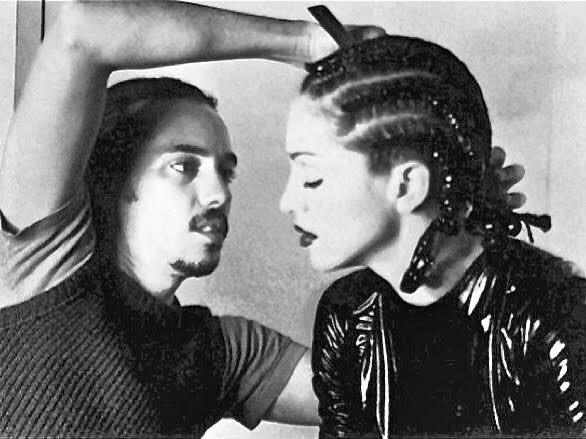
Madonna’s relationship to other cultures has never been subtle. From early in her career, she drew heavily on aesthetics, music, fashion, and spiritual traditions that did not originate with her. These borrowings were often presented as bold, boundary-breaking, or celebratory. Yet over time, a pattern has emerged in which cultural forms are adopted, popularised, and monetised with far more benefit accruing to Madonna than to the communities from which those forms came.
One of the earliest and most cited examples is her embrace of Black and queer subcultures in the 1980s and early 1990s. Madonna’s association with voguing and ballroom culture, particularly through the song and video “Vogue,” introduced many mainstream audiences to a scene created by Black and Latinx queer communities. While the visibility mattered, the power imbalance was clear. The culture was framed through Madonna’s lens, her body, and her celebrity, while the people who built it remained largely peripheral to the rewards and recognition that followed.
This pattern would repeat. Madonna has repeatedly positioned herself as a conduit through which “underground” or non-Western cultural forms reach a wider audience. The problem is not that cultures influence one another. It is that the direction of benefit almost always flows upward. Madonna gains reinvention, relevance, and profit. The communities she draws from often gain exposure without control, context, or sustained support.
In the late 1990s and early 2000s, Madonna turned toward South Asian aesthetics and spirituality. Henna, bindis, yoga imagery, and references to Eastern religions became part of her public presentation. These elements were frequently stripped of religious or cultural specificity and repackaged as symbols of mysticism, sensuality, or personal enlightenment. For audiences unfamiliar with their origins, the distinction between tradition and aesthetic collapsed.
More recently, Madonna’s engagement with African cultures has drawn renewed criticism. Her adoption of hairstyles, clothing, and visual motifs associated with African nations has often been framed as homage. Yet these gestures have tended to centre Madonna herself, rather than the people or contexts she references. Cultural markers become accessories to her persona rather than entry points into deeper understanding.
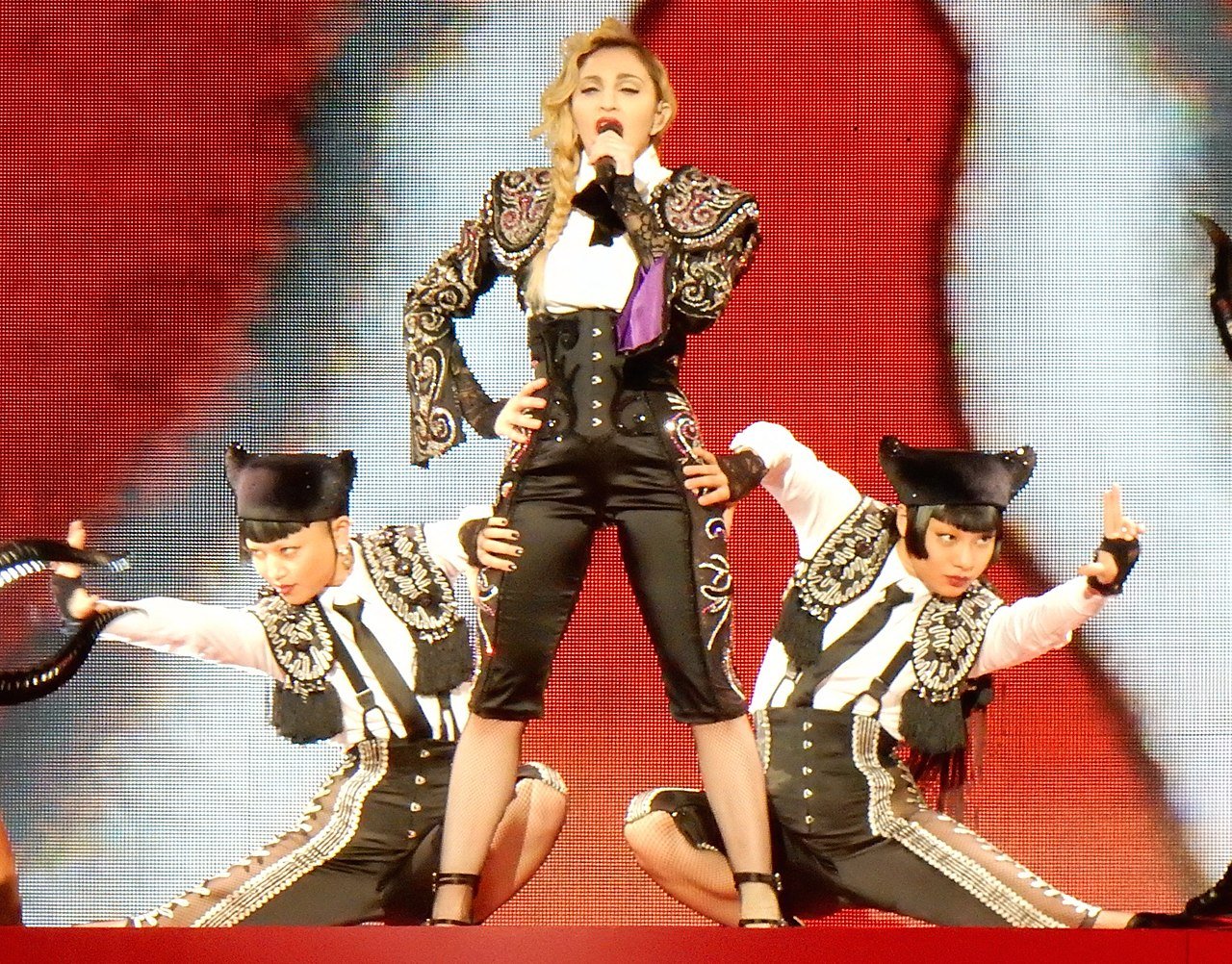
Madonna has frequently defended these choices by invoking universality. Art, she has argued in various interviews over the years, belongs to everyone. Influence is not ownership. Inspiration should not be policed. These arguments resonate in creative communities that value freedom of expression. But they sidestep a central issue: not everyone operates from the same position of power.
When a globally famous, wealthy artist adopts elements from marginalised cultures, the risks and rewards are unevenly distributed. Madonna can put on and take off identities without consequence. The people for whom those identities are lived realities often cannot. What looks like playful experimentation from one vantage point can feel like extraction from another.
Another recurring feature of Madonna’s cultural borrowing is the way it is framed as personal transformation. Each new aesthetic is tied to a phase, an era, a narrative of self-discovery. The cultures she draws from become tools in a story about Madonna becoming something new. Once the era ends, the culture often recedes from view, replaced by the next source of inspiration.
This cycle matters because it reinforces a hierarchy in which dominant figures are positioned as explorers and curators, while marginalised communities are positioned as resources. Culture becomes something to be mined for freshness, not something to be engaged with on its own terms.
Representation Watch does not deny Madonna’s influence, nor does it dismiss her impact on conversations about gender, sexuality, and artistic autonomy. Her work has opened doors and challenged norms. But acknowledging that legacy does not require ignoring the costs of her approach to culture.
Cultural appropriation is not defined by intent alone. It is defined by patterns, outcomes, and power. Over decades, Madonna’s career offers a clear case study in how repeated borrowing can blur into erasure, even when framed as admiration.
The question is not whether Madonna was “allowed” to draw inspiration from other cultures. The question is why those cultures so often appear as backdrops to her self-reinvention, rather than as partners with agency, credit, and lasting benefit. When the same dynamic repeats across time, eras, and influences, it becomes harder to treat each instance as harmless or isolated.
Madonna’s career invites a broader conversation about how pop stardom interacts with culture in a globalised world. Who gets to experiment without consequence. Who is framed as innovative, and who is framed as raw material. And why, even after decades of critique, these patterns remain so familiar.
That conversation is not about cancelling a legacy. It is about examining it honestly, and asking what responsibility comes with cultural power that lasts this long and reaches this far.

_(cropped).jpg)