
Eddie Redmayne is often held up as a model of thoughtful, serious acting. His performances are described as meticulous, immersive, and emotionally committed. Over the past decade, that reputation has been reinforced by awards, critical acclaim, and a steady stream of prestige roles. But two of the most celebrated performances of his career also sit at the centre of an unresolved conversation about representation, access, and who is allowed to tell certain stories.
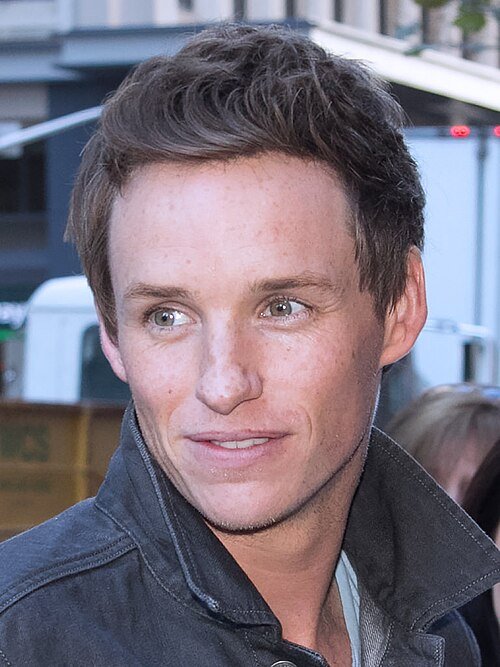
In 2015, Redmayne won the Academy Award for Best Actor for his portrayal of Stephen Hawking in The Theory of Everything. The performance was praised for its physical detail and emotional restraint. Critics focused on the visible transformation of Redmayne’s body over the course of the film, framing the role as an extraordinary technical achievement.
That framing was familiar. It followed a long-standing pattern in which disability is treated as a performance challenge for able-bodied actors rather than as a lived experience best represented by disabled performers themselves. The more “convincing” the imitation, the more the industry applauds itself.
At the time, criticism from disabled actors and advocates was present but largely sidelined. Many pointed out that actors with disabilities continue to face extreme barriers to employment, even in stories explicitly about disability. When the most high-profile disabled roles go to non-disabled actors, those barriers harden. Opportunity is not expanded. It is consolidated.
A year later, Redmayne became the focus of a second, overlapping controversy when he portrayed a trans woman in The Danish Girl. Although this role was not disability-related, the criticism it provoked followed similar lines. Trans actors argued that casting a cisgender man in the role reinforced a pattern in which marginalised identities are treated as costumes, while trans performers remain excluded from major opportunities.
What distinguishes Redmayne from some of his peers is that he has since acknowledged these criticisms. In later interviews, he stated that he would not take on such roles again, describing the casting of The Danish Girl as a mistake and recognising that it took space from trans actors who deserved those opportunities.
That reflection matters. It represents a shift from defensiveness to listening. But it also highlights a deeper issue: the industry rewarded these choices before it questioned them.
Representation Watch’s concern is not primarily about Redmayne as an individual. It is about the system that frames imitation as excellence and access as secondary. Disabled actors are rarely considered for leading roles, even when stories revolve around disability. When they are excluded, the justification is often “authenticity” in craft rather than authenticity in experience, a contradiction that rarely gets interrogated.
Awards culture plays a significant role in sustaining this dynamic. Performances that involve visible physical transformation are treated as inherently serious, brave, or difficult. Disability becomes a narrative device that signals importance, depth, and suffering. The actor’s ability to approximate that suffering is then celebrated, while the absence of disabled performers in the room is treated as incidental.
This framing has real consequences. It shapes casting decisions, funding priorities, and audience expectations. It reinforces the idea that disabled people are subjects of stories rather than authors of them. And it sends a clear message to disabled performers about where they are, and are not, welcome.
Redmayne’s later comments suggest an awareness of this imbalance, but awareness alone does not dismantle a system. The question is not whether one actor would make different choices today. It is whether the industry will stop rewarding the same patterns tomorrow.
Disability representation does not improve when access is granted only after imitation has been perfected. It improves when disabled people are trusted to tell their own stories, embody complex characters, and be seen as capable of carrying prestige without explanation.
The continued celebration of able-bodied performances in disabled roles reveals how far the industry still has to go. Transformation remains easier to applaud than inclusion. Craft remains easier to reward than equity.
Eddie Redmayne’s career offers a useful lens through which to examine this tension. Not because he is uniquely culpable, but because his work sits at the intersection of talent, good intentions, and systemic failure. His willingness to reflect publicly is notable. The structures that enabled and rewarded those roles, however, remain largely intact.
Representation Watch believes that progress in disability representation requires more than better apologies or future restraint. It requires a shift in what is valued. Until access itself is treated as central, rather than optional, the same conversations will repeat, attached to new performances and new awards.
The real question is not whether able-bodied actors can convincingly portray disability. It is why disabled actors are still so rarely given the chance to be seen as worthy of the same acclaim.


.jpg)