
For decades, Victoria’s Secret presented itself as the definitive authority on femininity, desirability, and glamour. Its fashion shows were global events, its models cultural fixtures, its imagery omnipresent. That dominance did not happen by accident. It was carefully constructed, relentlessly repeated, and tightly controlled.
It was also profoundly exclusionary.
The brand’s vision of beauty was narrow by design. Thin, young, able-bodied, overwhelmingly white, and conventionally feminine bodies dominated its campaigns. This was not simply a reflection of trends. It was an assertion of taste and power, one that shaped public expectations while marginalising anyone who did not fit the mould.
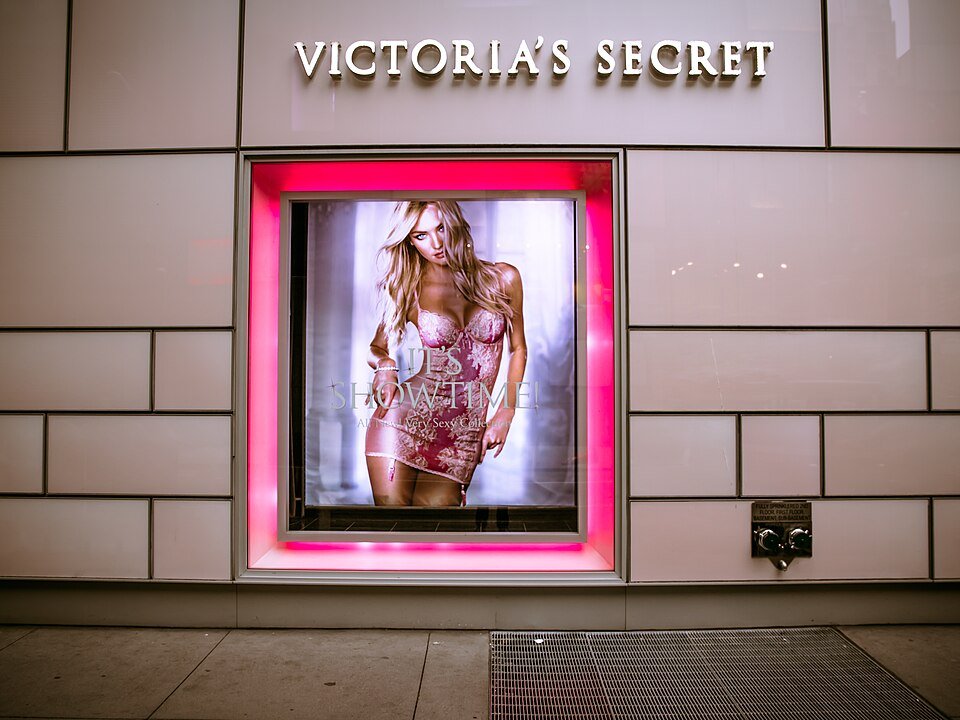
As criticism grew, Victoria’s Secret responded not with curiosity, but with defiance. Executives openly dismissed calls for inclusion, framing them as distractions from the brand’s “fantasy.” That word came up often. Fantasy, in this context, was treated as a shield against accountability. If the image was aspirational, then exclusion could be justified as creative vision rather than structural bias.
The cracks began to show most clearly around representation of gender, body diversity, and disability. In interviews, senior figures associated with the brand questioned whether trans models or plus-size bodies belonged on the runway at all. These comments were not misquotes or slip-ups. They reflected a worldview in which desirability was tightly policed and deviation was treated as dilution.
Cultural appropriation also played a role in the brand’s decline. Past runway shows featured Native American-inspired headdresses and other cultural motifs presented as exotic spectacle, divorced from their origins and significance. These moments were defended as theatrical flair. For many observers, they read as careless and outdated, especially as conversations around representation were shifting elsewhere in the industry.
What made Victoria’s Secret’s position increasingly untenable was not just criticism, but contrast. Other brands began experimenting with broader definitions of beauty. Audiences were exposed to alternatives. The idea that there was only one version of fantasy no longer held.
As viewership declined and sales dropped, the brand attempted a pivot. The famous fashion show was cancelled. New campaigns highlighted “real women.” Statements were issued acknowledging past mistakes. These changes were framed as evolution, but they arrived late, and many felt they were reactive rather than reflective.
Representation Watch views Victoria’s Secret’s decline not as a morality tale about changing tastes, but as an example of what happens when institutions mistake dominance for immunity. The brand did not fail because it lacked awareness. It failed because it resisted listening.
For years, critique was treated as an external annoyance rather than internal feedback. The voices of those excluded were acknowledged only when commercial pressure made dismissal impossible. By then, trust had eroded.

Importantly, the issue was not simply who appeared in the ads or on the runway. It was how femininity itself was framed. Victoria’s Secret promoted a version of womanhood that was passive, decorative, and narrowly sexualised. Empowerment was marketed as confidence within constraints, not freedom from them.
This matters because representation is cumulative. When one brand dominates visual culture for long enough, its standards begin to feel natural. They become reference points. Undoing that influence takes more than a rebrand. It requires confronting the assumptions that powered it in the first place.
Victoria’s Secret’s attempts at reinvention continue, and some steps may prove meaningful. But the legacy of exclusion cannot be erased by aesthetic updates alone. Accountability is not about replacing one set of images with another. It is about acknowledging why certain bodies and identities were kept out, and why those decisions were defended for so long.
The story of Victoria’s Secret is not just about a lingerie company. It is about what happens when fantasy is allowed to harden into ideology. When a narrow vision of beauty is protected at all costs, it eventually collapses under the weight of what it excludes.
Representation Watch sees this moment not as an endpoint, but as a warning. Cultural power without responsiveness is fragile. When institutions refuse to adapt until they are forced, change becomes damage control rather than growth. And by the time the message is finally heard, the audience has often already moved on.


.jpg)