Kim Kardashian is one of the most recognisable public figures of the 21st century. Millions follow her every move, from fashion choices to business ventures. That reach brings influence, and with influence comes responsibility – especially when those choices touch on culture, identity, and history.
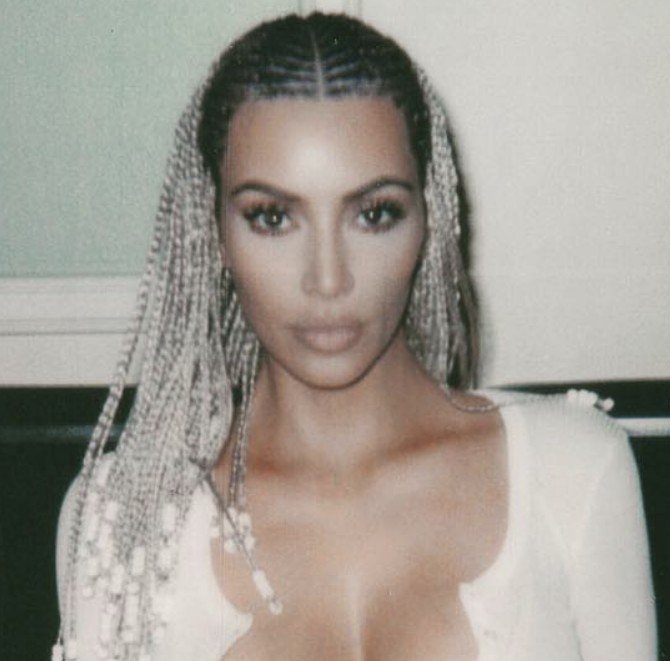
One recurring pattern we have observed is Kardashian’s repeated adoption of traditionally Black hairstyles – particularly braids – in ways that strip them from their cultural context, are celebrated by mainstream fashion media, and circulate widely without acknowledgement of their origin.
By crediting Bo Derek rather than the Black communities where cornrows and similar braided styles have existed for centuries, this moment illustrates a familiar problem. When a hairstyle rooted in Black history is reframed through a white, Hollywood reference point, its origins are effectively displaced. The style becomes detached from the people who created and sustained it, and reattached to a figure who made it palatable to mainstream audiences decades later. This kind of attribution is not neutral. It reinforces a pattern in which Black cultural practices gain legitimacy only after being filtered through whiteness, while the communities most closely associated with them remain unacknowledged or marginalised. The issue is not admiration or influence, but whose history is named and whose is quietly written out of the story.
Braids – whether box braids, cornrows, or Fulani styles – have deep historical roots across African and African diaspora communities. For many Black people, these styles carry heritage, practical ingenuity, and personal meaning. Yet in the fashion and celebrity world, these same styles are often reframed as new trends when worn by non-Black influencers.
Kardashian has worn braided styles on numerous occasions. In 2019 alone, images of her in cornrows appeared in magazines, on red carpets, and across social media. In January 2019, she posed with long cornrows reminiscent of styles worn in Black communities for decades, generating tens of thousands of likes and reposts. Within hours, the images were everywhere – fashion sites praised the look, tabloids shared it, and influencers copied it. Meanwhile, many from the communities who popularised these styles voiced frustration.
A common theme on Instagram and Twitter was that the look felt like cultural borrowing without context – especially when Kardashian’s posts did not mention the style’s origins. Some commentators pointed out that Black women have long faced discrimination for wearing the same hairstyles in workplaces or schools, while on Kardashian they were styled and celebrated without qualification.
Representation Watch does not contest anyone’s right to choose how they wear their hair. Personal expression is valuable. The issue we are tracking is consistency and consequence: when powerful figures repeatedly adopt cultural styles without acknowledgment or reflection, those acts circulate as trends rather than contributions, and they shape public understanding of whose culture is seen as original and whose is borrowed.
Jean-Paul Goude genskaber sin 'Champagne Incident' med hende der Kim – pic.twitter.com/PyB6EiaPct
— Bjarke Friis Kristensen (@bjarkefk) November 12, 2014
This pattern is not new to Kardashian herself. It has played out across fashion runways and awards ceremonies, where Black-originated styles gain visibility only after being worn by celebrities with greater mainstream cultural capital. The result is familiar: fashions that once carried specific community significance are reframed as “edgy,” “new,” or “avant-garde,” obscuring their roots.
In August 2018, for example, Kardashian appeared on the cover of a high-fashion magazine wearing tight cornrows. The internet exploded with praise. Meanwhile, countless Black women shared stories of being stigmatized in schools or workplaces for similar styles. The discrepancy between celebration and marginalization highlights a broader cultural imbalance.
Public figures with massive platforms – especially those with stakes in beauty, fashion, and branding — have a choice. They can simply adopt cultural elements as aesthetic tools, or they can model informed visibility by acknowledging history, crediting originators, and using their platforms to elevate voices from the communities who created those forms.
Coverage from Teen Vogue and others noted widespread social media discussion about Kardashian wearing braids, with many commentators pointing out that styles rooted in Black culture were repeatedly praised when worn by her but judged more harshly on Black women historically.
The frustration is not about personal style – it’s about whose experience is recognised, whose labour is seen as foundational, and whose contributions are made invisible once power and visibility enter the picture.
Representation Watch’s analysis is not intended to shame individual people. Rather, it is to highlight patterns that have cultural consequences. When a hairstyle moves rapidly from being rooted in a specific community to being reframed as a global trend without context, it tells us something about how culture is valued and who gets credit.
As public figures continue to shape fashion and cultural conversation, we encourage thoughtful engagement with the histories behind the aesthetics. Celebrating beauty should not require erasing origin or overlooking the experiences of communities whose style legacies are repurposed without acknowledgement.
Our aim is not to police personal expression but to encourage responsible influence – influence that recognises heritage, gives credit where it is due, and supports a richer, more inclusive understanding of cultural contribution.