If you looked at the world’s population and the stories Hollywood tells, you might assume they bore no relation to each other. Muslims make up roughly a quarter of the global population, yet their presence in mainstream Western film and television is vanishingly small. A 2021 study found that over 90 percent of the top 200 Hollywood films had no Muslim characters at all, and many of the limited portrayals that do exist are linked to violence or fight scenes rather than everyday life or complexity.
This discrepancy is not an accidental oversight. It is part of a broader pattern in which entire groups are either erased from story worlds or filtered through familiar, reductive lenses. When Muslims do appear on screen, the roles are disproportionately tied to violence, threat, or foreignness – characters who speak with an accent, are refugees or migrants, or embody archetypes of extremism. In one survey of Hollywood portrayals, more than half of the few Muslim characters depicted were associated with violent acts and framed as outsiders.
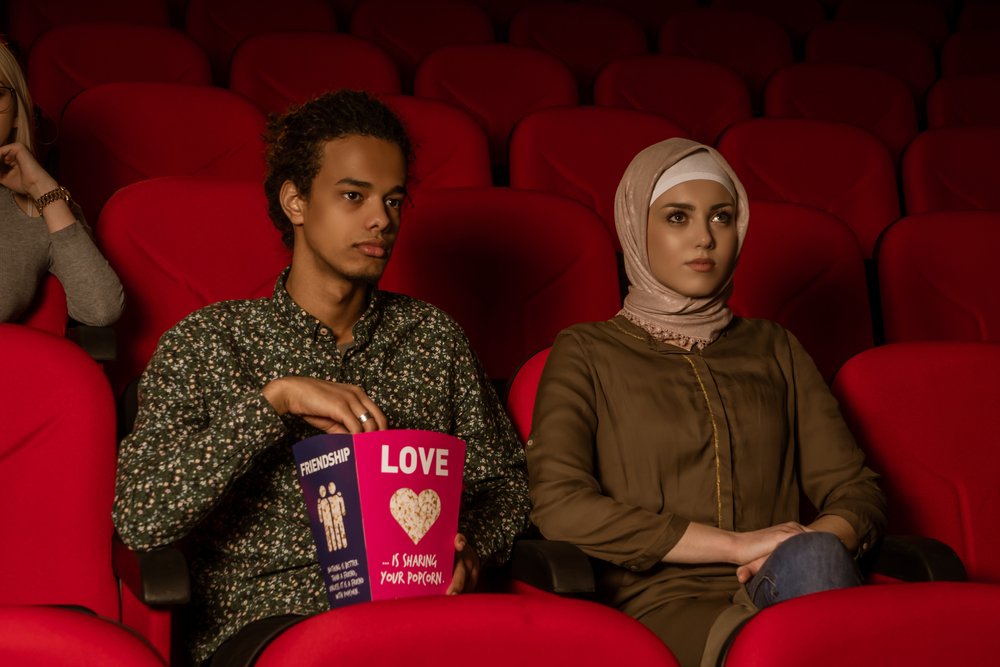
The consequences of these patterns are not trivial. Research on media representation is clear that what people see repeatedly – especially on entertainment platforms watched by millions of households – shapes perceptions. Stereotypes that link Muslims with violence or backwardness reinforce existing biases in the real world. Over decades, scholars have documented how these portrayals contribute to Islamophobic attitudes and support for exclusionary policies, particularly in Western contexts where media consumption is high.
One reason these portrayals are so persistent is that they are deeply rooted in historical frameworks of “Orientalism,” a term coined by scholar Edward Said to describe how Western literature and art have long depicted Eastern cultures as exotic, dangerous, or inferior. In film and television, that impulse often translates into characters who are either silent side figures, stripped of individuality, or dangerous forces set against a Western norm. These are not balanced or nuanced storytelling choices; they are legible shortcuts that reinforce binary codes of “us” and “them.”
For Muslim women, the stereotypes take specific shapes – submissive, oppressed, or in need of rescue. Hijab is often shown as a symbol of repression rather than personal or spiritual choice. In some shows, a hijab-wearing doctor might dramatically remove her headscarf to signal “freedom,” using a visual shorthand that aligns with Western misconceptions rather than lived realities.
These media tropes have real social effects. When characters become shorthand for threat or otherness, audiences internalise those associations. What role models do for one group, stereotypes do for another – they shape what people intuitively see as “normal” or “threatening” before any conscious thought. Research shows that positive, relatable portrayals of minoritised groups in entertainment media can reduce prejudice, whereas repetitive negative portrayals can increase stereotypical thinking and affect how audiences feel about policies and communities that are the subject of those portrayals.
The absence of Muslims on screen – not just in sheer numbers but in diverse, multi-dimensional roles – also speaks to power. Representation is about more than visibility; it is about who gets to narrate their own stories. When most creative control lies with dominant groups, stories about marginalised communities are filtered through outsiders’ imaginations. This is why many Muslim characters in Western film history have embodied tropes rather than complexity, and why nuanced portrayals remain rare.
Yet there are signs of change. In recent years, projects such as Hulu’s Ramy, Netflix’s Mo, and Disney’s Ms. Marvel have centred Muslim protagonists whose cultural and religious identities are integral to their lives, not just accessories to conflict narratives. These shows – created by and starring Muslim artists – present characters wrestling with universal human concerns alongside specific cultural contexts. They do not depict Muslims as monoliths; they depict them as people.
The difference here is not merely surface representation. When creators from within a community tell their own stories, they bring nuance, contradiction, humour, and internal diversity – all qualities that have long been missing from mainstream depictions. These portrayals invite audiences to see Muslims not as abstract threats or stereotypes but as neighbours, friends, and fully realised individuals with lives that can resonate across cultures.
For Representation Watch, the state of Muslim representation on screen highlights two core truths about media today. First, absence or negative stereotypes are not just artistic choices; they are political acts with cultural consequences. When entire populations are excluded or misrepresented, media reinforces hierarchies of worth. Second, progress cannot come from tokenism alone; it requires structural change in who makes media, who funds it, and whose voices are centred.
Representation is not just a matter of being seen. It is a matter of being understood and heard in stories that reflect the contradictions, joys, struggles, and everyday moments of real lives. For too long, Muslim characters in Western entertainment have been flattened into villains, outsiders, or plot devices. What audiences deserve – and what communities deserve – is more than that.
True representation does not tame complexity into digestible stereotypes. It confronts complexity honestly. It acknowledges that being Muslim intersects with race, nationality, gender, sexuality, and class in ways that cannot be reduced to familiar tropes. It understands that representation shapes reality – not merely reflects it.
The journey from stereotype to substance is ongoing. But it matters not just for Muslims themselves, but for all audiences who experience the world through the stories they see. Representation that is diverse, nuanced, and authentic enriches everyone. And in a world where media shapes attitudes as much as it entertains, that enrichment is not optional – it is essential.